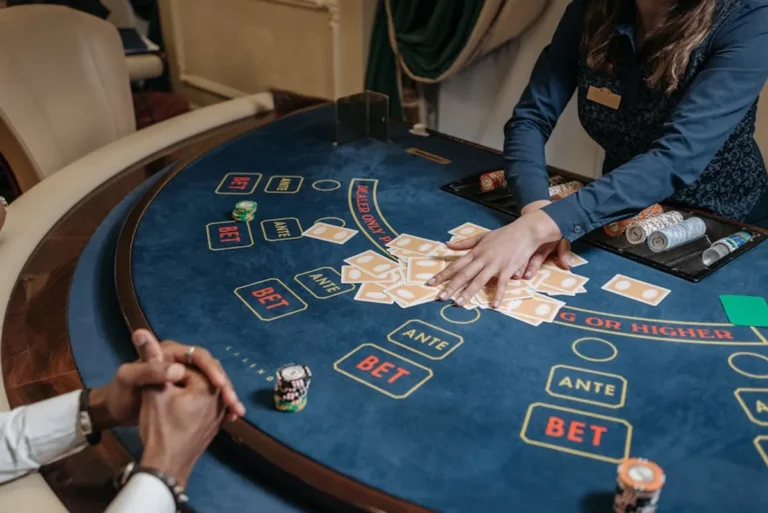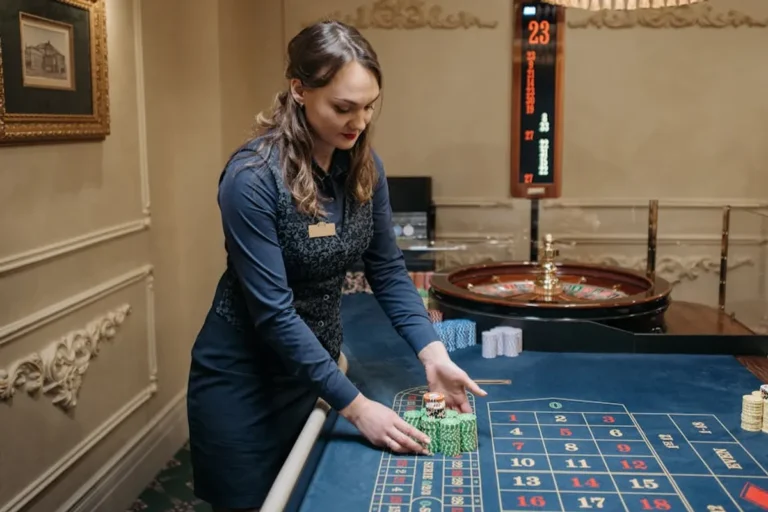
Navigating the foundational casino table games—Blackjack, Roulette, and Baccarat—requires understanding their distinct mechanics, odds, and player decisions. For beginners, distinguishing between these games and grasping their core principles is key to informed engagement. This guide breaks down each game, providing the essential knowledge to approach them with a clear perspective on strategy and probability.
Blackjack: Strategy and Decision-Making
Blackjack is a card game played against a dealer, where the objective is to have a hand total closer to 21 than the dealer's hand, without exceeding 21. Understanding card values and primary player actions forms the basis of effective play.
Core Rules and Card Values
Cards 2 through 10 are worth their face value. Face cards (Jack, Queen, King) are each worth 10. An Ace can be valued as either 1 or 11, depending on which value benefits the hand most without busting (going over 21). A "blackjack" is an Ace and a 10-value card dealt as the initial two cards, typically paying 3:2.
Player Actions and Strategy
After receiving two initial cards, players have several options:
- Hit: Take an additional card.
- Stand: Decline additional cards.
- Double Down: Double the initial bet, receive one more card, and then stand. This is typically allowed on specific hand totals (e.g., 9, 10, or 11).
- Split: If the first two cards are a pair, the player can split them into two separate hands by placing an additional bet equal to the original. Each new hand is then played independently.
- Surrender: Give up half the initial bet and forfeit the hand. This option is not always available and is typically used when the player's hand is very poor against a strong dealer upcard.
The house edge in Blackjack can be among the lowest of casino games, often below 1%, when played with optimal basic strategy. This strategy involves making the mathematically correct decision for every possible player hand against every possible dealer upcard, minimizing the house's advantage over time.
Pro Tip: Mastering basic strategy is critical for Blackjack. Charts detailing the optimal play for every hand combination are widely available and can significantly reduce the house edge. For beginners, focusing on when to hit or stand based on the dealer's visible card is the first step.
Roulette: Pure Chance and Betting Versatility
Roulette is a game of pure chance where players bet on the outcome of a ball landing in one of the numbered and colored pockets on a spinning wheel. Its appeal lies in its simplicity and the wide array of betting options.
Wheel Variations and House Edge
Two primary types of roulette wheels exist:
- European Roulette: Features 37 pockets (numbers 1-36 and a single zero, '0'). The single zero gives the house an edge of approximately 2.70% on all bets.
- American Roulette: Features 38 pockets (numbers 1-36, a single zero '0', and a double zero '00'). The presence of the extra double zero nearly doubles the house edge to approximately 5.26%, making it less favorable for players than European Roulette.
Bet Types and Payouts
Roulette bets are broadly categorized into two groups:
Inside Bets: Placed directly on numbers or small groups of numbers.
- Straight Up: A bet on a single number. Pays 35:1.
- Split: A bet on two adjacent numbers. Pays 17:1.
- Street: A bet on three numbers in a row. Pays 11:1.
- Corner: A bet on four numbers that meet at one corner. Pays 8:1.
- Six Line: A bet on six numbers forming two adjacent rows. Pays 5:1.
Outside Bets: Placed on broader categories of numbers, offering lower payouts but higher probabilities of winning.
- Red/Black: Bet on the ball landing on a red or black number. Pays 1:1.
- Odd/Even: Bet on an odd or even number. Pays 1:1.
- High/Low (1-18/19-36): Bet on numbers in the low or high range. Pays 1:1.
- Dozens (1st 12, 2nd 12, 3rd 12): Bet on one of three groups of twelve numbers. Pays 2:1.
- Columns: Bet on one of three vertical columns of twelve numbers. Pays 2:1.
Outside bets are often preferred by beginners due to their higher probability of winning, despite the lower payouts.
Baccarat: Simplicity and Low House Edge
Baccarat is a card game known for its straightforward rules and relatively low house edge, particularly on certain bets. Players bet on which of two hands—the "Player" or the "Banker"—will have a total closer to nine, or if the hands will result in a "Tie."
Game Objective and Card Values
The goal is to bet on the hand that will have a total closest to nine. Card values are as follows: Aces are worth 1; cards 2 through 9 are worth their face value; 10s and face cards (Jack, Queen, King) are worth 0. If a hand total exceeds 9, only the second digit is considered (e.g., a hand of 7 and 8 totals 15, which becomes 5).
Betting Options and House Edge
There are three main betting options:
- Player Bet: Betting that the Player hand will win. This bet typically has a house edge of about 1.24%. It pays 1:1.
- Banker Bet: Betting that the Banker hand will win. This is statistically the best bet in Baccarat, with a house edge of approximately 1.06%. Due to this lower edge, a 5% commission is usually deducted from winning Banker bets. It pays 1:1 (minus commission).
- Tie Bet: Betting that both hands will have the same total. This bet has a significantly higher house edge, often around 14.36%, and typically pays 8:1 or 9:1.
Unlike Blackjack, players do not make strategic decisions regarding hitting or standing in Baccarat. The game follows a strict set of "third-card rules" that dictate when additional cards are drawn for either hand, which players do not need to memorize or influence. This makes Baccarat exceptionally simple to play, as the player's only decision is which bet to place.
Warning: While the Tie bet in Baccarat offers attractive payouts, its significantly higher house edge makes it a poor choice for long-term play. Beginners should prioritize the Banker bet for its statistical advantage.
Choosing Your Starting Point: Factors for Beginners
When deciding which game to explore first, consider your preference for strategy versus pure chance, and your comfort with different house edges:
- Blackjack: Best for players who enjoy strategic thinking and want to influence outcomes through their decisions. With proper basic strategy, it offers one of the lowest house edges.
- Roulette: Ideal for those who prefer a game of pure chance with a wide range of betting options, from low-risk outside bets to high-payout inside bets. European Roulette is generally preferred due to its lower house edge.
- Baccarat: Suited for players seeking a simple, fast-paced game with a low house edge (on the Banker bet) without requiring any in-game strategic decisions.
Practical Approaches for New Players
Approaching these games effectively as a beginner involves more than just understanding the rules. It requires a mindful approach to play and bankroll management.
Start by familiarizing yourself with the rules and basic strategies in a low-stakes or free-play environment. Many platforms offer demo versions of these games, allowing practice without financial risk. This provides a valuable opportunity to internalize actions, understand payouts, and observe game flow. For Blackjack, consistent practice with a basic strategy chart is invaluable. For Roulette, experimenting with different outside bets can offer a clearer picture of their frequency and impact on your balance. In Baccarat, simply observing the flow and outcomes of Player and Banker bets can build confidence.
Establishing a clear bankroll and adhering to it is paramount. Decide how much you are willing to allocate for play and stick to that limit, regardless of outcomes. This discipline prevents chasing losses and ensures that the experience remains entertainment. Remember that while strategy can reduce the house edge, it cannot eliminate it entirely. All casino games are designed with a built-in advantage for the house over the long term.
Finally, understand that these games are forms of entertainment. The goal for beginners should be to enjoy the experience, learn the dynamics, and play responsibly within their means. Focus on the process of learning and the enjoyment of the game, rather than solely on immediate outcomes.
Frequently Asked Questions
Which of these games offers the best odds for a player?
Blackjack generally offers the best odds for the player, provided they consistently use basic strategy. The house edge can be reduced to less than 1% in many scenarios. Baccarat's Banker bet also has a very low house edge, around 1.06%.
Is it possible to count cards in Blackjack as a beginner?
While card counting can give a player an advantage in Blackjack, it is an advanced technique that requires significant practice and is not recommended for beginners. Focusing on basic strategy is far more impactful and accessible for new players.
What is the biggest mistake beginners make in these games?
A common mistake is playing without understanding the basic rules or optimal strategy, leading to higher house edges. For example, in Roulette, choosing American over European Roulette significantly increases the house's advantage, and in Baccarat, consistently betting on the Tie is a poor decision due to its high house edge.
Should I play American or European Roulette?
Always choose European Roulette if available. Its single zero pocket results in a significantly lower house edge (2.70%) compared to American Roulette's double zero (5.26%), making it more favorable for players.